

Arthur Jafa: Less is Morbid
Museum of Modern Art, New York. Through 5 July 2026

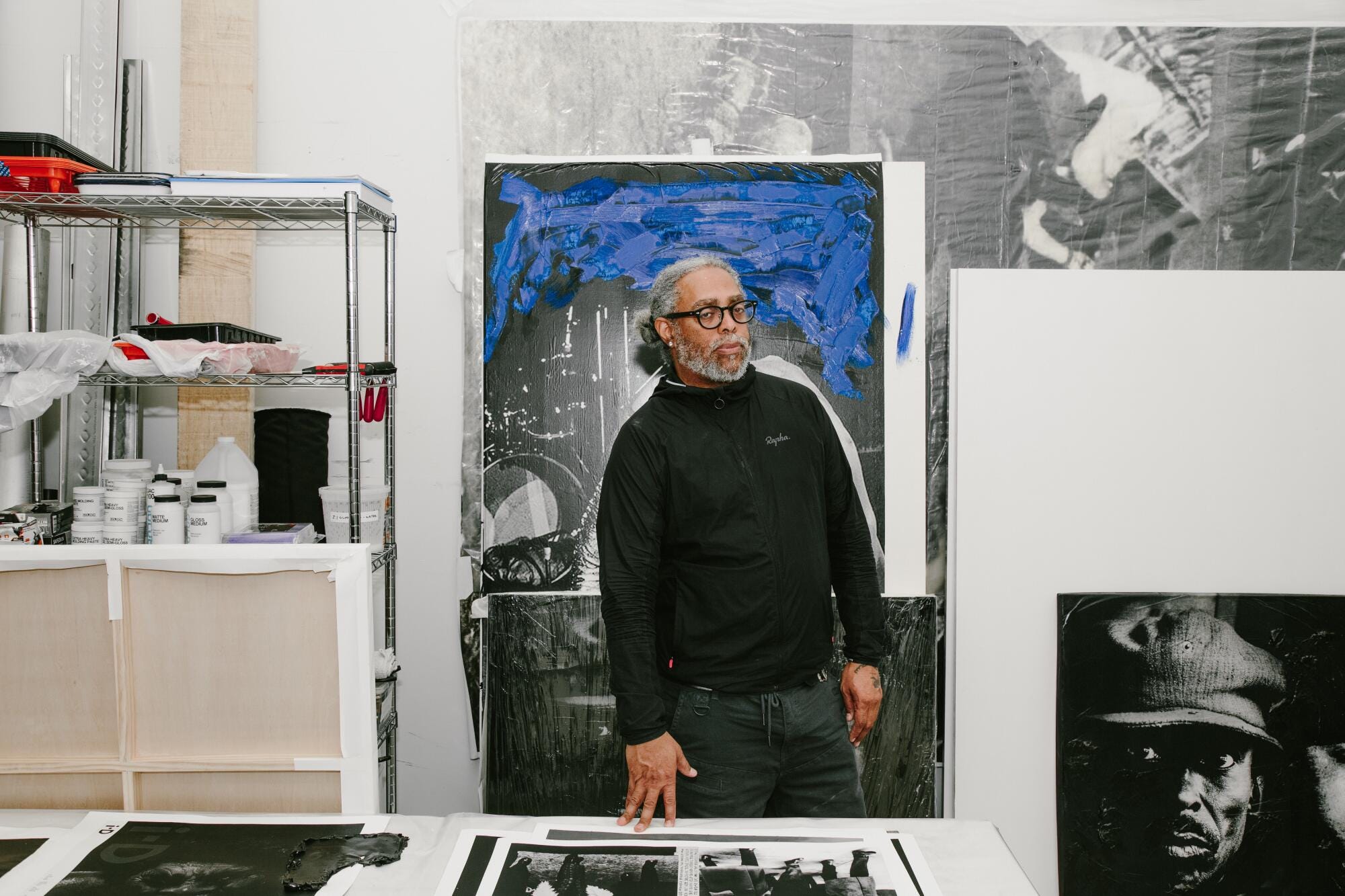
When Arthur Jafa was a student at Howard University, he walked into an exhibition of eight Mark Rothko paintings, was infuriated, told his instructor it was “bullshit” and then went back nine more times. Rothko became his favourite painter. Less Is Morbid, his contribution to MoMA’s Artist’s Choice series, rewards exactly that kind of return: open-mindedness, patience and a willingness to look again. As Jafa has said, “We should operate with a sense of abundance, because the one thing we’re never lacking is imagination.”
Who is he?
Arthur Jafa (b. 1960) grew up first in Tupelo, Mississippi, the birthplace of Elvis Presley, and then in Clarksdale, deep in the Delta, a place he calls “a Black Jurassic Park.” His parents were teachers; his siblings include a musician, a filmmaker, and a graphic novelist.
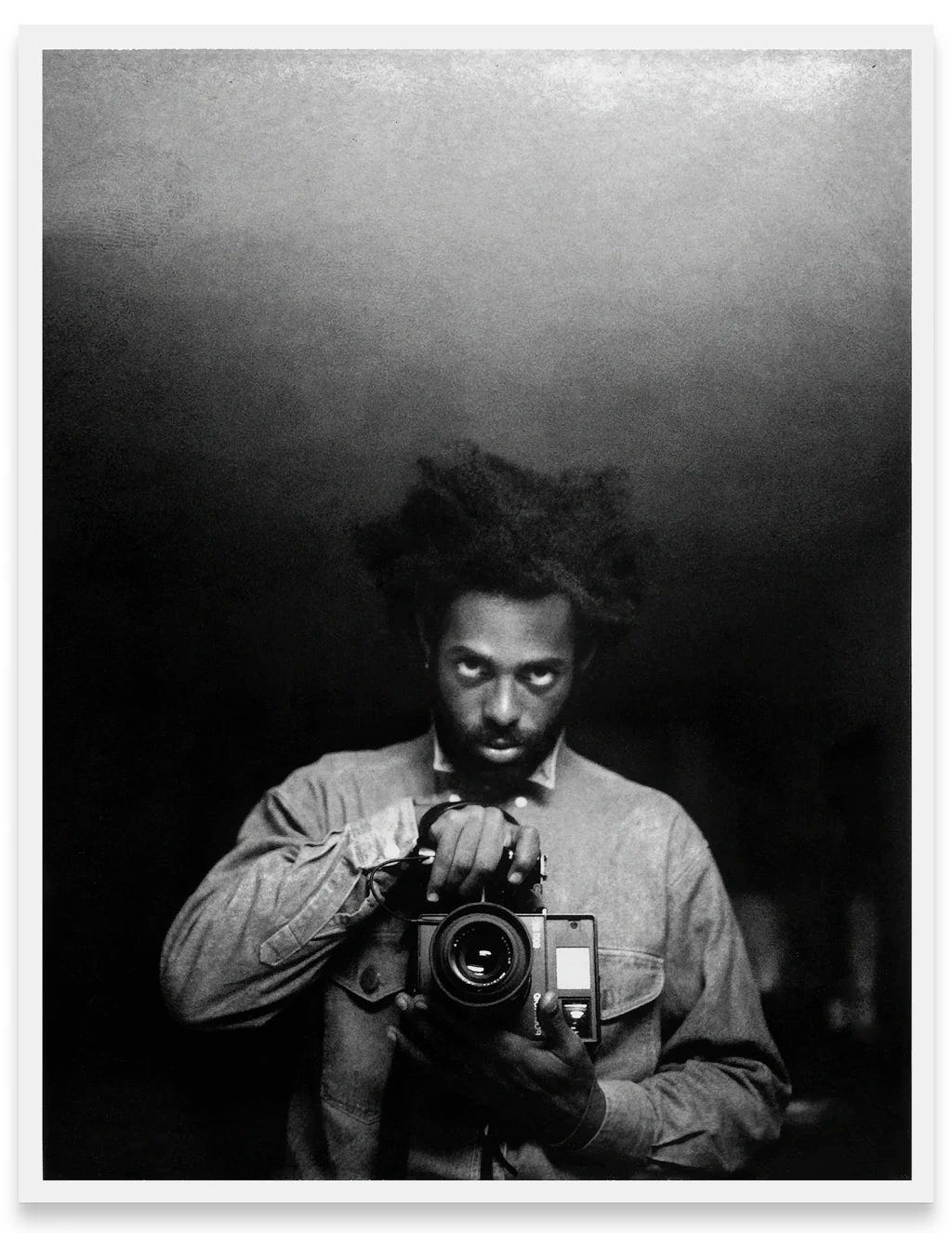
His earliest memories are of standing at the comic book rack at Ashley’s, a convenience store in Tupelo, looking at Jack Kirby’s Fantastic Four. “There’s no other single figure who has had as much impact on my life,” he has said of Kirby, “not even just as an artist, as a person with imagination.” From comics, the trajectory was seamless: science fiction, then Latin American literature – Márquez, Cortázar – what he describes as “a continuous, very easy transition.” The fantastical still hasn’t left.
Studying under the Ethiopian filmmaker Haile Gerima at Howard, Jafa engaged with the Black Arts Movement of the 1960s and 70s and began grappling with the question that would shape his career: how can visual culture do for Black people what Black music already does? He studied both architecture and filmmaking and developed a keen eye for the innate meanings summoned by the arrangement of objects in space, images unfolding in time. Recognizing no one would fund experimental houses, he told his father, “I’d rather be a failed filmmaker than a failed architect.”
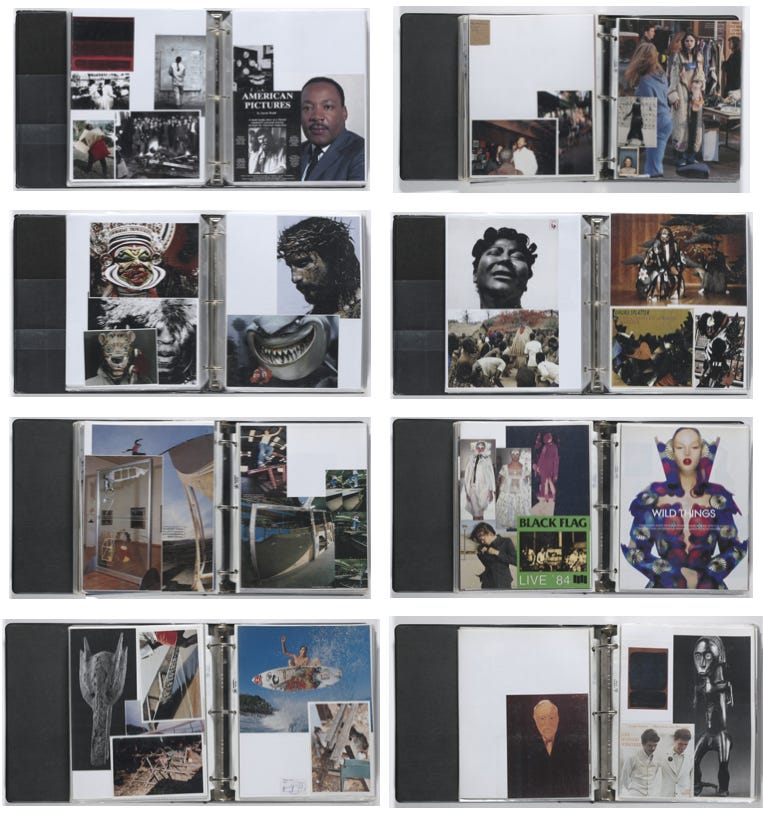
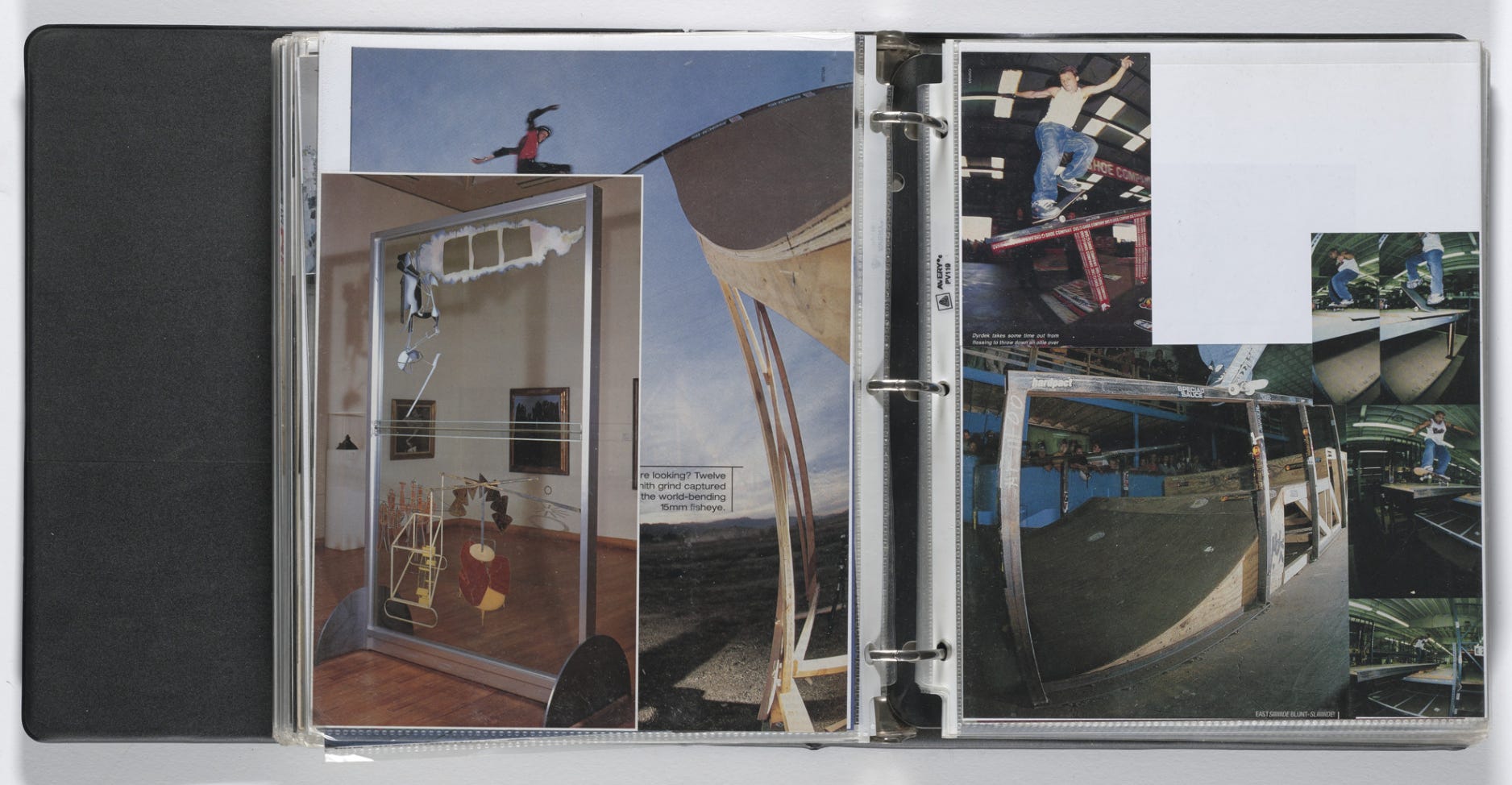
Working as a cinematographer through his thirties, Jafa kept notebooks (i.e. three-ring binders) and filled them with found images: magazine clippings, art reproductions, snapshots, historical photographs, all placed in deliberate proximity. Friends like Thelma Golden and Robin D.G. Kelley recall him pulling them out on the streets of Harlem. When they were finally exhibited, at the 2016 Made in L.A. biennial, they were already essential viewing.
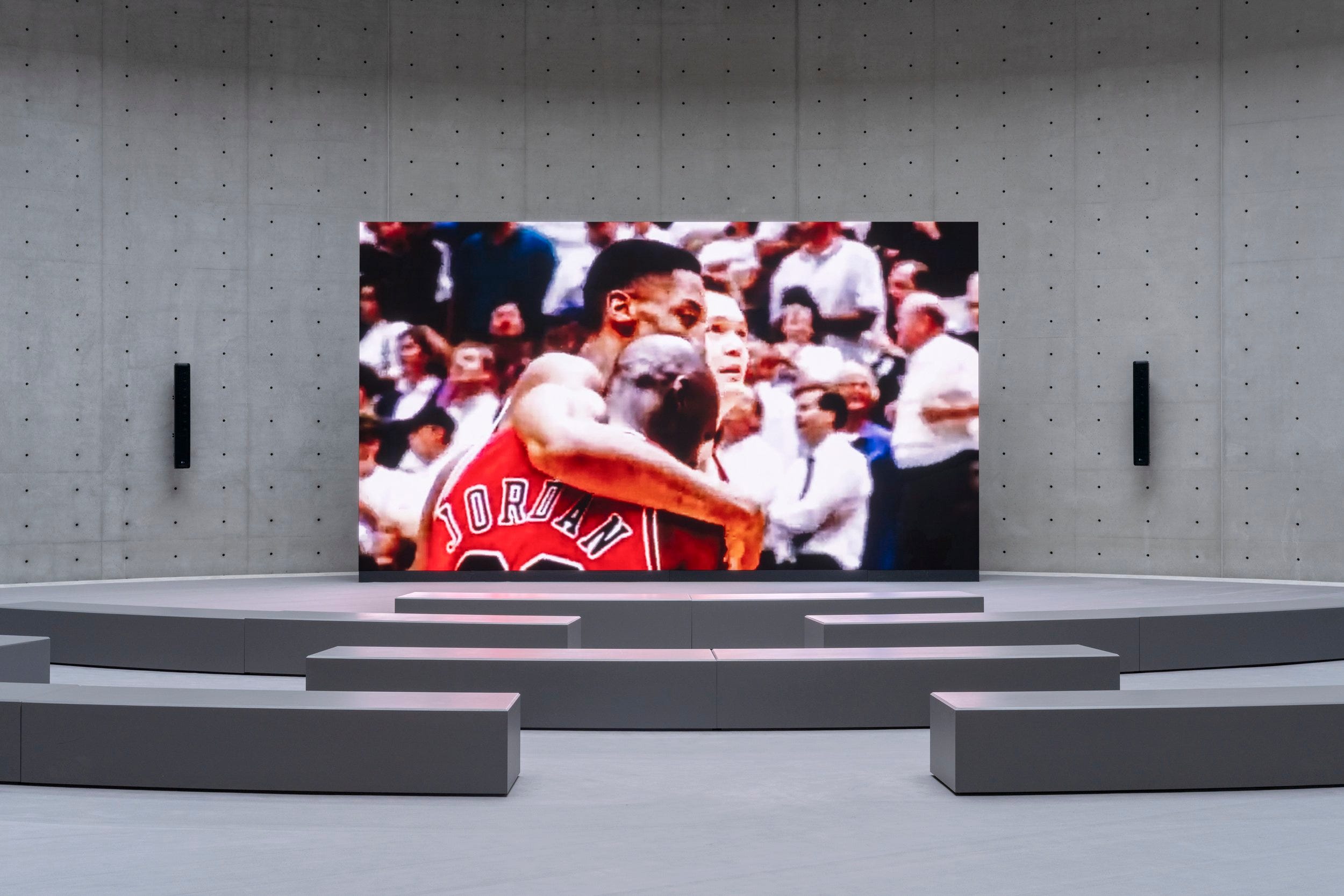
That same year, in a New York hotel room between jobs, he assembled Love Is the Message, The Message Is Death. When it entered institutions, the piece hit with unusual force. Seven minutes long, set to Kanye West’s “Ultralight Beam”, the piece offers footage of Black life intermixed with anti-Black violence. It does not explain itself. Three years later, he won the Golden Lion at Venice in 2019 for The White Album.
Jafa names the principle underlying his work “contextual dissonance”: placing something in a context that did not produce it, creating intellectual tension. The object does not settle; it pushes back. Meaning emerges from that friction. African artefacts, displaced into Western contexts, reshaped how image, space, and time could be understood. A new Cubism emerged directly from that encounter.
Beneath this is what he calls ‘besidedness’: the forced proximity of the Middle Passage, strangers held together in the hold, making something out of catastrophe. Worlds broken, worlds made. He returns to it not as historical fact but as an active condition, a way of describing what happens when you place things beside each other that were never meant to meet. It will become the organising logic of Less Is Morbid.
Asked what he wants his work to do, he borrows from Chris Rock: “I don’t want to make work about Black people, I want to make work like Black people.” It is not about representation but energy and whether a work can operate like an artefact, a readymade, or his own notebooks. “I’m trying to figure out spells… to allow people the space to think differently.”

Ben Luke spoke with him last week on The Art Angle podcast, and it’s a good one.
The Exhibition
Less Is Morbid is the seventeenth instalment of MoMA’s Artist’s Choice series, which invites artists to curate from the permanent collection. For many, this requires a shift from making to selecting. For Jafa, who has worked through juxtaposition for decades, the distinction barely applies. His selections, he says, are not rational but intuitive, drawn to works that signal “large-scale shifts… emancipations from previously occupied realms.”
I went to MoMA with two aims: Jafa’s show, and the major Duchamp retrospective upstairs, the first in the U.S. in over fifty years. Three hundred works trace six decades, from early Cubism to the readymades, a replica of The Large Glass, the Boîtes-en-valises, the rotoreliefs, Étant donnés. It is an extended inquiry into what happens when you move an object from one context to another and who controls its meaning. It is the right prelude to Jafa.
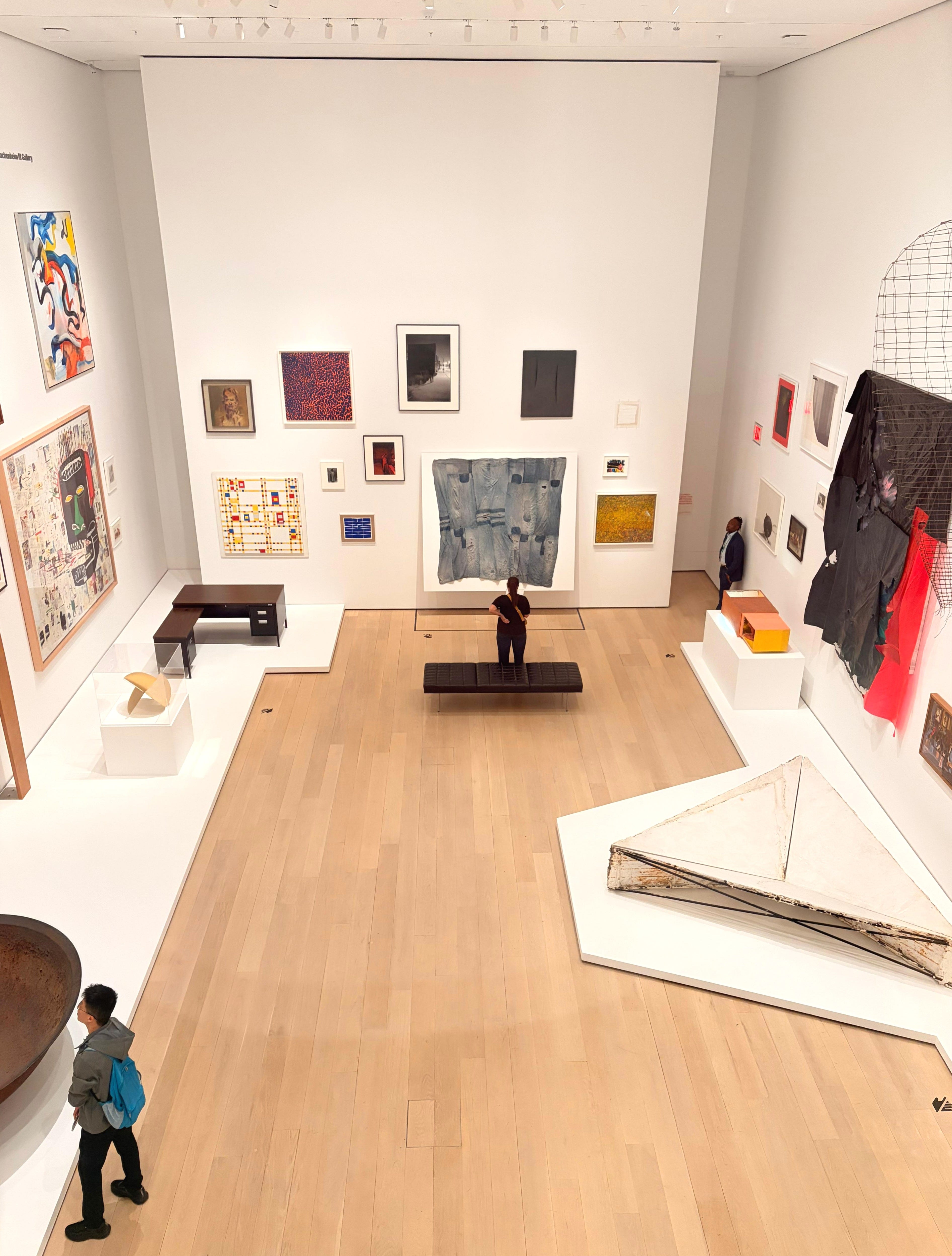
Wending my way down from the Duchamp show, I stumbled upon Less Is Morbid from above. From that vantage, it feels denser than a typical museum hang. Jafa has compared it to the Hubble telescope: from a distance, scattered points of light but up close, entire galaxies. Or, as he puts it elsewhere, like a DJ set where one track bleeds into another.
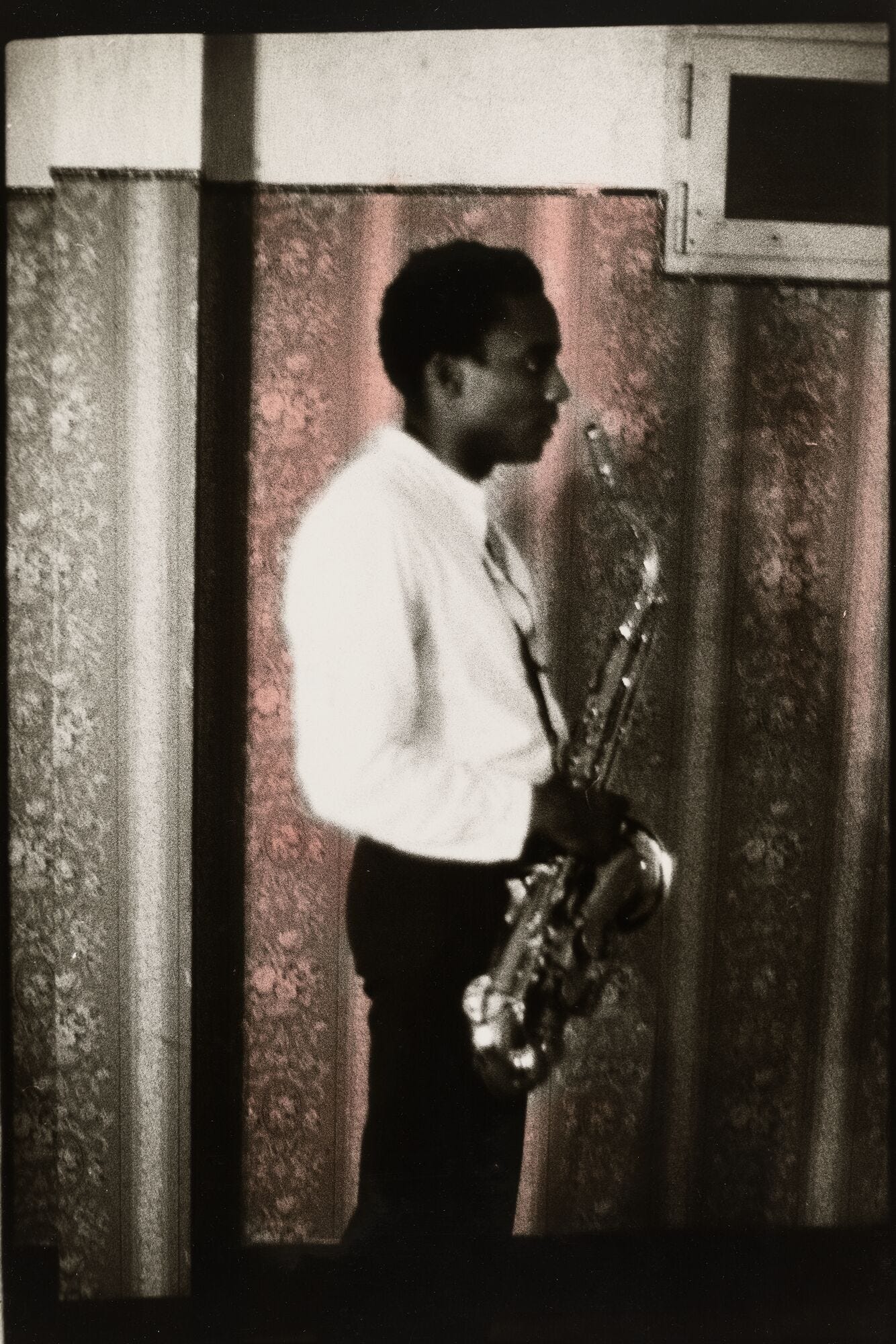
The opening wall boasts Ming Smith’s hand-painted gelatin silver print of her husband, saxophonist David Murray, taken in Padova in 1978. Beside it, Roy DeCarava’s Hallway (1953) presents a tenement interior in near-darkness, tones deepening almost to black. This wall is about light at its limits and what remains visible.
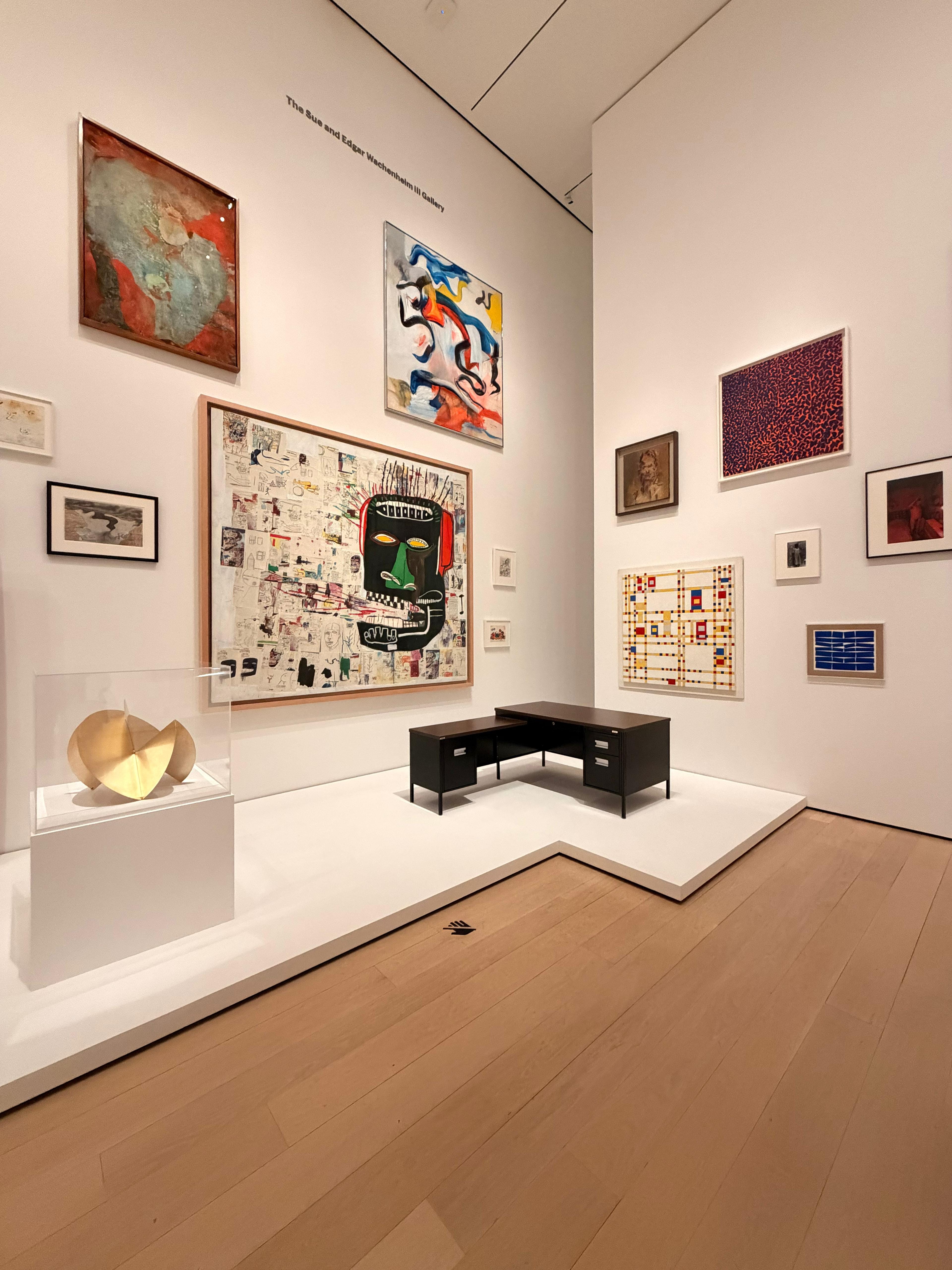
I felt an immediate pull to the back corner. Works by Willem de Kooning, Frank Auerbach, and Jean-Michel Basquiat hang above Cameron Rowland’s Attica Series Desk (2016), a piece of institutional furniture produced by incarcerated workers. Rowland operates within what Huey Copeland calls the “already-made”: not freely appropriated objects, but those produced under constraint, without ownership. Basquiat’s Glenn radiates outward, beaming energy onto the surrounding canvases.
Just beyond, Jafa gives Lutisha Pettway’s quilt Bars (c. 1950) what he calls “pride of place.” He first saw it over twenty years ago, but describes its impact as immediate, present. “[The artists don’t] look like what legacy museums have dubbed the great avant-garde artists… They’re women. They’re working class. They’re Black. They’re in Alabama.” He places it in dialogue with Mondrian, Eggleston, and Ryman. Of Eggleston, he notes his ability to denormalise the “misbegotten” aspects of American life.
Across the room hang Cy Twombly’s Leda and the Swan (1962) and Basquiat’s Untitled (1981), raw and immediate, made when he was just twenty. Lower on the wall is a photograph documenting preparations for MoMA’s 1935 exhibition African Negro Art: looted objects arranged for display, their makers absent from the record. Jafa notes its “resounding absence of context.” He has not centered it but embedded it, available to those who notice.
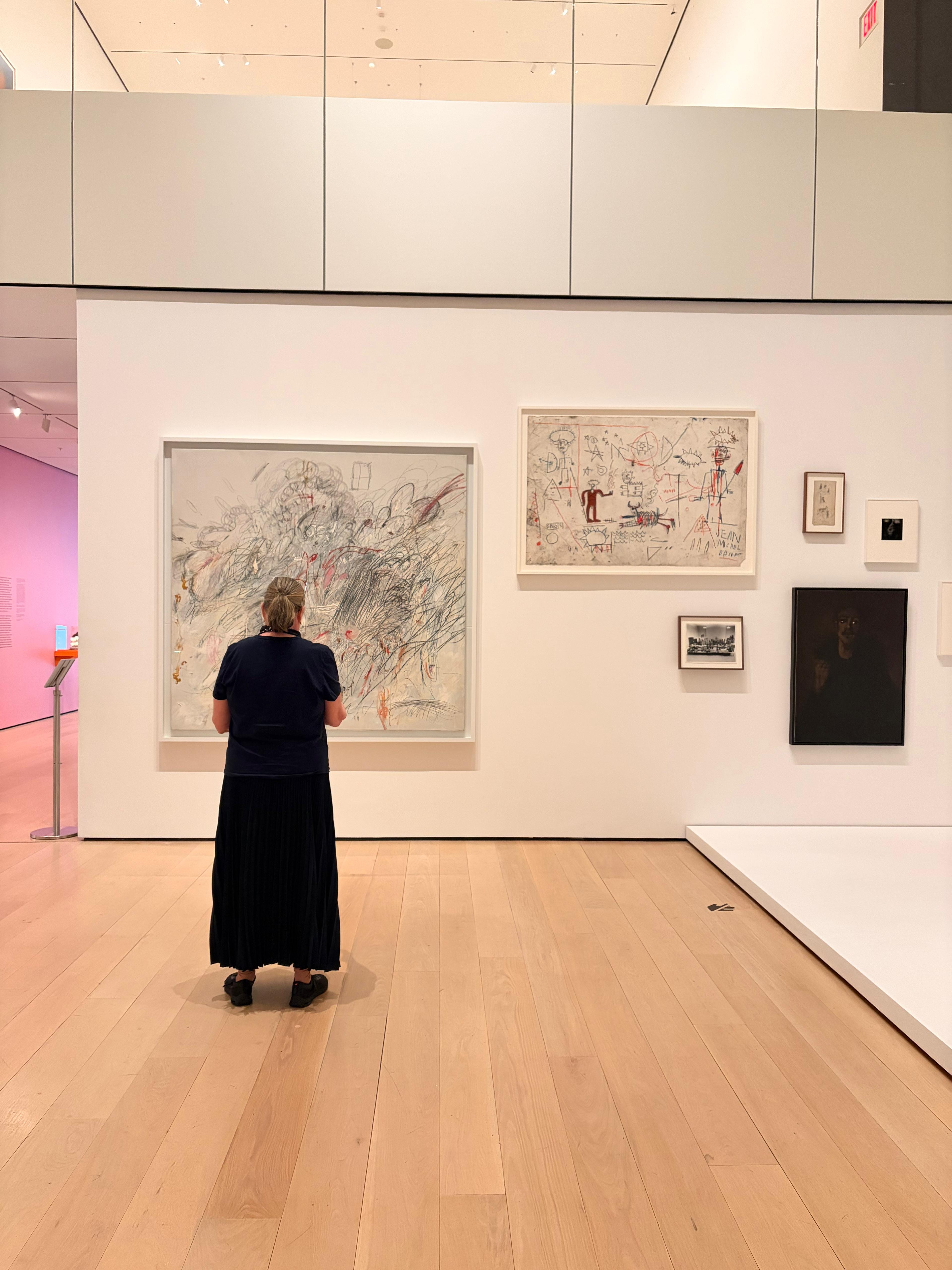
Less Is Morbid is an argument about how things survive. Pettway’s quilt lived as a domestic object long before anyone called it art. Ming Smith's photographs were kept alive by a community before they entered the museum. The 1935 photograph sat in MoMA's archive for decades before Jafa pulled it out and put it on the wall as evidence. What he has built is a room where Pettway hangs beside Mondrian, Rowland below de Kooning and everywhere you look there is a modern master in the corner of your eye… Rothko and Twombly and Frankenthaler… the unnamed beside the canonical, held in proximity until the difference becomes impossible to ignore. Not simply what gets seen. What gets carried forward.
The Influence
Jafa’s influence runs through artists who came to image-making sideways, via displacement, accumulation, or the archive as active rather than passive material. A few examples worth following. They each exist in Jafa’s territory: the found object under pressure, caught between erasure and insistence.
Alvaro Barrington compresses Caribbean textiles, family memory, street culture, and art history onto a single surface without resolving any of it. The paintings are argumentative in the way Jafa’s juxtapositions are argumentative: meaning generated by embracing multitudes, not narrowing them. You cannot stand in front of a Barrington and settle on one reading. That refusal is the work.
Garrett Bradley asks parallel questions: what is recorded, what is not, and what images can carry. She has said: “The beauty of what we do as filmmakers is we are memory-makers. Films are not physical objects. I really wanted to find a way to try to evoke the way life really is.” Her film Time (2020) places the home archive beside the public record, testimony arriving before interpretation. Like Jafa, she trusts the material to do the arguing.
Frida Orupabo likewise begins with the archive, collecting and reorganising images of Black life. Where Jafa juxtaposes, she cuts, pins, and reassembles, her collaged figures drawn from colonial archives refusing passivity. Invited by Jafa to exhibit at the Serpentine in 2017, she shares his interest in displacement but pushes it further. They look back to look forward.